Modernization of the Ash Handling System in Thermal Power Plant Nikola Tesla A in Serbia
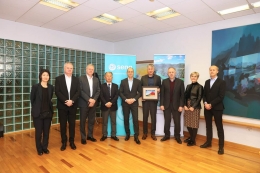
RUDIS as a leading member of the consortium "Consortium AHS" on August 15, 2023 signed a contract with the client Elektroprivreda Srbije for modernizing of the entire ash handling system of the thermal power plant Nikola Tesla A in Obrenovac
Thermal power plants, which are part of Elektroprivreda Srbije (EPS), consume 30 million tons of lignite every year. The combustion product is approximately 5.5 million tons of ash and slag per year, deposited in open landfills with a total area of 1,200 ha. Thermal power plant "Nikola Tesla A" is located along the Sava river near Obrenovac, about 41 km south-west of Belgrade. It is the largest thermal power plant in Serbia and includes six units (A1-A6) with a total net power of 1765 MW.
The "Consortium AHS" beside the leading member RUDIS, consists of the companies MVM EGI Zrt. from Hungary and two local partners, Energotehnika - Južna Bačka and Millennium Team. The contract value of the project is 160 million euros, the duration of contractual works is 42 months. Works includes the replacement of the existing system for transporting ash and slag on four blocks of the Nikola Tesla TPP (units A3-A6). The current way of handling lignite combustion waste products, which is based on the technology of disposal by thin hydro mixture with a ratio of liquid to solid phase of 10:1 (10 parts of water, 1 part of ash) has been no longer environmentally acceptable and is in violation of the legal requirements and best available technological solutions. Most of the water required for process returns to the power plant, part of this water evaporates and seeps into the ground, underground water and drains into the Sava river, which flows right next to the landfill.
With the implementation of the project "Modernization of the Ash Handling System TENT A", all waste products (electro filter ash, boiler ash, slag and gypsum) will be mixed together in a ratio of 1:1 (1-part solids and only 1-part water), so that the deposition product is a so-called thick hydro mixture.
The specified method of handling or mixing waste products is in accordance with the recommendations of the BREF reference document.
The technology applied for ash and slag transport and storage at TENT A, after the system will be reconstructed, includes the following:
- a system for collecting electro filter ash from under the existing electro filters with pneumatic transport of ash into the ash silo
- a system for collecting boiler ash and slag from under the existing blocks and transporting them to the mixing process
- fly ash storage system and dosing into the mixing process
- system for supplying gypsum suspension to the mixing process
- system of mixing waste products with water in a ratio of 1:1
- pumping station of the thick hydro mixture and transport to the landfill
- auxiliary systems for plant operation (compressed air system, process water...)
- power system
- instrumentation and management system.
For the above stated systems, the contractor, Consortium AHS, will elaborate project documentation, build a facilities, supply and assemble technological equipment, perform cold and hot start-ups, training of the client's staff and proof the contractual parameters during the trial 30-day operation.
RUDIS, as the leader of the consortium, will manage and coordinate the entire project and implement three independent systems: a pneumatic fly ash transport system, fly ash storage and dosing into the mixing process system and a gypsum suspension handling system.
Contractual works will be carried out within the framework of the existing electrical systems of the thermal power plant and activities on the site. The works is to be carried out with minimal disturbances to the power plant operation. The new ash handling system will ensure better air quality by preventing ash from being dispersed by the wind, and will protect groundwater, the Sava river and soil from pollution.